
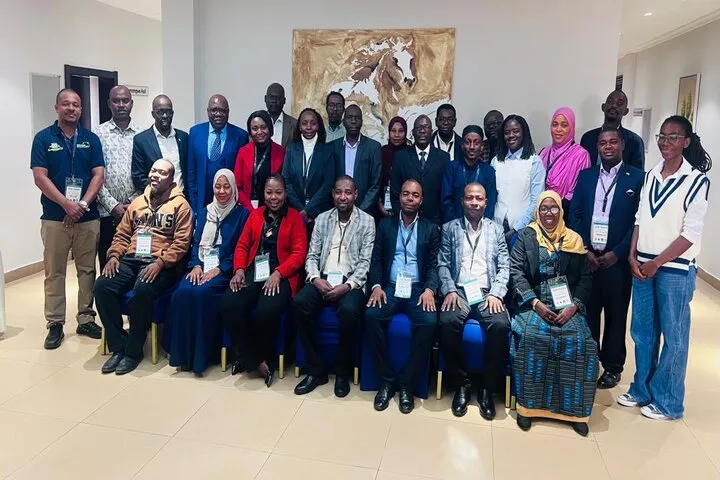
The University of Zambia (UNZA), in collaboration with three other local higher education institutions, has commenced a specialized five-day training program for 13 public officials from Zanzibar, Tanzania, aimed at bolstering regional expertise in managing the environmental and social risks associated with major development projects.
The initiative is being jointly coordinated by UNZA, the University of Lusaka (UNILUS), the National Institute of Public Administration (NIPA), and the Chalimbana Local Government Training Institute (CLGTI). Funded by the World Bank through the Zambia Devolution Support Programme (ZDSP), the capacity-building program targets officers from Zanzibar’s Project Implementation Units under the Ministry of Infrastructure and Transport, as well as the Ministry of Finance and Planning, who are overseeing the World Bank-funded "Big-Z" infrastructure project.
Speaking during the official opening of the training, UNZA Deputy Vice Chancellor for Academic Affairs, Professor Boniface Namangala, emphasized that while large-scale development projects yield vital socio-economic benefits, they also pose severe risks if not rigorously managed.
In a speech delivered on his behalf by UNZA Project Coordinator Dr. Kaonda Mususu, Prof. Namangala identified water contamination, air and noise pollution, occupational injuries, land degradation, gender-based violence, the spread of communicable diseases, and disruptions to local livelihoods as primary threats accompanying rapid development.
"Comprehensive environmental and social risk assessments are indispensable in identifying, preventing, and mitigating these potential impacts," Prof. Namangala stated. "This ensures that development interventions are implemented responsibly, sustainably, and without causing unnecessary harm to people or the environment."
Prof. Namangala further observed that environmental and social risk management is inherently multidisciplinary, noting that no single institution or sector can address these complex challenges in isolation. He called for sustained, coordinated action and strategic partnerships among governments, academic institutions, development partners, regulatory agencies, and local communities at both national and international levels.
To facilitate the training, the four participating Zambian higher learning institutions designed a unified curriculum tailored to both international best practices and local regulatory frameworks.
"With the support of the Zambia Devolution Support Programme, a comprehensive curriculum was jointly developed by the four participating institutions of higher learning," Prof. Namangala said. "The curriculum is aligned with internationally recognized environmental and social standards while also incorporating Zambia's national regulatory and policy frameworks."
Organizers highlighted that the participation of the Zanzibar delegation reflects a growing commitment to cross-border collaboration in Southern and East Africa. By equipping public sector professionals with practical monitoring, planning, and implementation skills, the program aims to establish a robust framework for executing sustainable, low-risk development initiatives across the region.